Moon (Chandra): Meaning, Role, and Importance in Astrology
1. What a Planet Really Is — Placing the Moon Correctly
In Jyotisha, a planet is not an event-maker. A planet is a principle of consciousness that operates through signs and houses.
- Signs show how a principle behaves
- Houses show where it acts
- Planets show what is acting
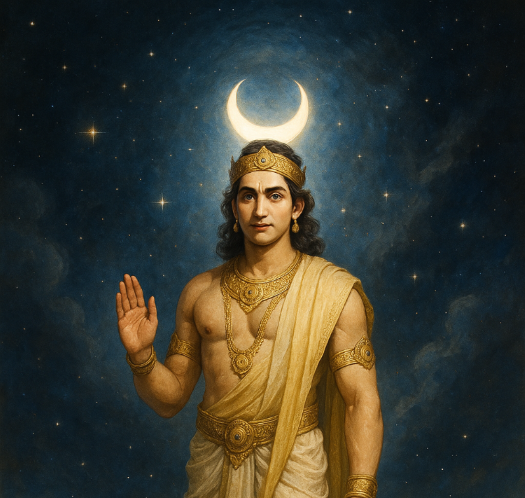
If the Sun is who you are, the Moon is how you experience being that person. When the Moon is disturbed, life may look fine externally, but inner stability collapses. This is why Parashara places immense importance on the Moon in judgment of happiness and suffering.
2. Core Identity of the Moon — What the Moon Symbolizes
The Moon represents:
- Mind (Manas) — the receptive, feeling mind
- Emotions and moods
- Memory and conditioning
- Sense of safety and comfort
- Mother and nourishment
- Adaptability and change
Psychologically, the Moon answers one question: “How do I feel about what is happening to me?”
A strong Moon gives Emotional stability, Inner calm, Capacity to adapt and Ability to process life without breaking A weak Moon produces Emotional reactivity, Anxiety or mood swings, Dependence on external reassurance and Difficulty letting go of past impressions
Example: Two people may face the same problem. The one with a strong Moon adjusts. The one with a weak Moon becomes overwhelmed.
3. Signs Ruled by the Moon — Cancer and Its Logic
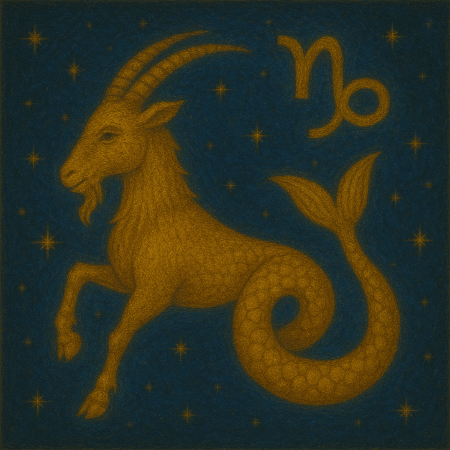
The Moon rules only one sign: Cancer. Cancer is not weakness or sentimentality. It is the principle of containment.
Just as a womb protects and nourishes life, Cancer Holds emotions, Preserves memory, Creates psychological safety, Protects what is vulnerable, The Moon rules only one sign because Emotional processing must be centralized, The mind needs a single base of security. Cancer is where feelings are not analyzed — they are lived.
4. How the Moon Operates Through Different Zodiac Signs
The Moon itself is always receptive and fluctuating. The Moon shows How stress is handled, What creates inner peace and What destabilizes the mind. Two people with the same Sun can live entirely different inner lives because their Moons function differently. What changes is how emotions are processed, based on the sign it occupies.
"So when we say “Moon in a sign”, we are really saying:"
Moon in Fire Signs (Aries, Leo, Sagittarius)
Emotions are immediate and expressive.
- Feelings arise quickly and discharge quickly
- Anger, excitement, and enthusiasm are dominant
- Suppression leads to restlessness
Example:
A fire Moon reacts first, calms later.
Moon in Earth Signs (Taurus, Virgo, Capricorn)
Emotions seek stability and control.
- Feelings are processed slowly and practically
- Comfort comes from routine, order, or productivity
- Emotional insecurity arises from chaos or instability
Example:
An earth Moon feels safe when life is predictable.
Moon in Air Signs (Gemini, Libra, Aquarius)
Emotions are mentally processed.
- Feelings are understood through thinking and discussion
- Emotional distance is common
- Overthinking replaces feeling
Example:
An air Moon talks about emotions instead of sitting with them.
Moon in Water Signs (Cancer, Scorpio, Pisces)
Emotions are deep and absorbing.
- Feelings linger and shape identity
- High empathy and sensitivity
- Emotional overwhelm possible without boundaries
Example:
A water Moon absorbs the emotional climate of its environment.
5. What It Means When the Moon Is Strong
A strong Moon does not mean emotional intensity. It means emotional resilience. A strong Moon gives:
- Calmness under pressure
- Psychological flexibility
- Healthy attachment
- Ability to nurture and be nurtured
People with a strong Moon Recover quickly from setbacks, Do not dwell excessively on emotional wounds and Provide emotional stability to others.
Example: A strong Moon person remains centered even during external chaos.
6. What It Means When the Moon Is Weak
A weak Moon does not deny intelligence or success. It creates inner instability. Common signs:
- Mood fluctuations
- Anxiety and insecurity
- Fear of abandonment
- Emotional dependency
Example: A person may appear confident but feels internally unsafe without constant reassurance.
Weak Moon placements push growth through Emotional self-awareness, Learning self-soothing and Detachment from emotional conditioning.
7. Integrating the Moon with Sign and House
The Moon must always be judged in context:
- Sign — how emotions function
- House — where emotional focus lies
- Aspects — what stabilizes or disturbs the mind
Examples:
Moon in 4th house → emotional anchoring in home and family
Moon in 10th house → emotional security tied to public role
Moon with Saturn → emotional restraint or heaviness
Moon with Rahu → emotional amplification and confusion
"Sun–Moon relationships are especially important:"
8. Why the Moon Matters
When the Moon principle is ignored or underdeveloped:
- Success feels hollow
- Relationships feel draining
- he mind remains restless
- ife feels emotionally unsafe
The Moon teaches one essential truth: Life is not lived through events, but through how those events are felt.
The Sun gives direction.
The Moon decides whether the journey feels safe or unbearable..