Ardra Nakshatra: Meaning, Nature, and Evolutionary Role
1. What a Nakshatra Really Is
A nakshatra is not a personality trait but a deep psychological conditioning field. While planets show what is acting and zodiac signs show how it expresses, nakshatras reveal why reactions arise instinctively and emotionally. They operate below conscious thought, shaping reflexes, attachment patterns, and inner responses before choice or reasoning appears. This is why nakshatras feel personal — they show how experience is processed at the deepest level of the mind.
This nakshatra describes how consciousness breaks when seeking no longer provides relief.
If Rohini stabilizes and Mrigashira searches, Ardra confronts.
Ardra begins curiosity no longer soothes and movement no longer distracts. It represents the necessary storm.
2. Core Nature of Ardra (Essence)
Ardra’s core drive is to shatter false structures.
Ardra does not seek comfort. It seeks exposure. It represents the instinct: “Let this break so truth can emerge.”
Ardra arises when illusions accumulate, emotional avoidance has reached its limit and gentle correction has failed. Ardra exists to force confrontation.
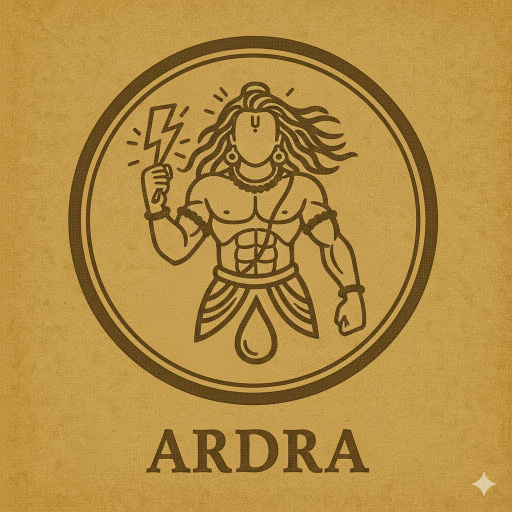
3. Symbol and Its Psychological Meaning — The Teardrop / Storm
The tear represents emotional release. The storm represents violent cleansing.
Psychologically, this symbol reflects breakdown, catharsis, and truth revealed through intensity.
Ardra destroys not to punish, but to clear the field of falsehood.
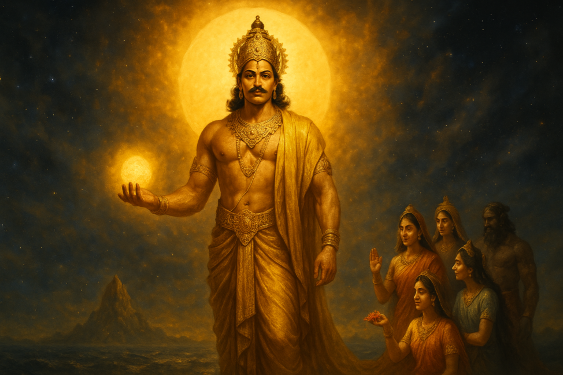
4. Ruling Deity — Rudra
Rudra represents raw transformative force, not cruelty.
He governs grief, rage, breakdown, and emotional catharsis.
Rudra removes illusion through intensity when gentler methods no longer work. Ardra does not negotiate with denial. It overwhelms it.
5. Planetary Ruler — Rahu
Rahu ruling Ardra is essential.
Rahu amplifies pressure and obsession until collapse becomes unavoidable.
This makes Ardra a nakshatra of psychological crises, sudden reversals and emotional purging. Rahu ensures Ardra cannot be bypassed.
6. How Ardra Expresses When Strong
A mature Ardra produces emotional honesty and resilience through chaos. It gives:
- Capacity to face uncomfortable truths
- Endurance during breakdown
- Ability to rebuild after collapse
- Transforming pain into insight
Such individuals confront what others avoid and rebuild on truth rather than illusion. They are often found in roles involving crisis management, psychology, activism, research, or reform — areas where truth emerges through disruption.
7. How Ardra Distorts When Unconscious
Without awareness, Ardra becomes destructive, cynical and emotionally volatile. Common distortions:
- Addiction to chaos
- Identifying with suffering
- Creating crises to feel alive
- Justifying cruelty as honesty
Such people burning everything instead of what is false. This is storm without direction.
8. Relationship with the Moon
Moon in Ardra processes emotions through intensity and breakdown.
Emotional extremes feel familiar, while calm can feel suspicious.
Such individuals experience dramatic emotional cycles, struggle with moderation and release occurs through tears, anger, or confrontation.
9. Evolutionary Lesson of Ardra
Ardra must learn that not every storm must destroy everything.
The lesson is to allow emotional release without self-destruction, to recognize when truth has already emerged and to stop identifying with chaos. Cleansing is complete when clarity arrives, not when chaos continues.
10. Summary
Ardra is the storm that exposes truth. It breaks illusion through intensity. When unconscious, it becomes destructive chaos. When mature, it clears falsehood and allows rebuilding on truth.